Rare Pulmonology News
Advertisement
Spotlight On
Sjögren’s syndrome
Sjögren's syndrome is an autoimmune disorder in which immune cells attack and destroy the glands that produce tears and saliva
Prevalence
7-10/100,000
Age of Onset
ICD-10
M35. 0
Inheritance
This condition does not appear to have a clear pattern of inheritance.
Rare View
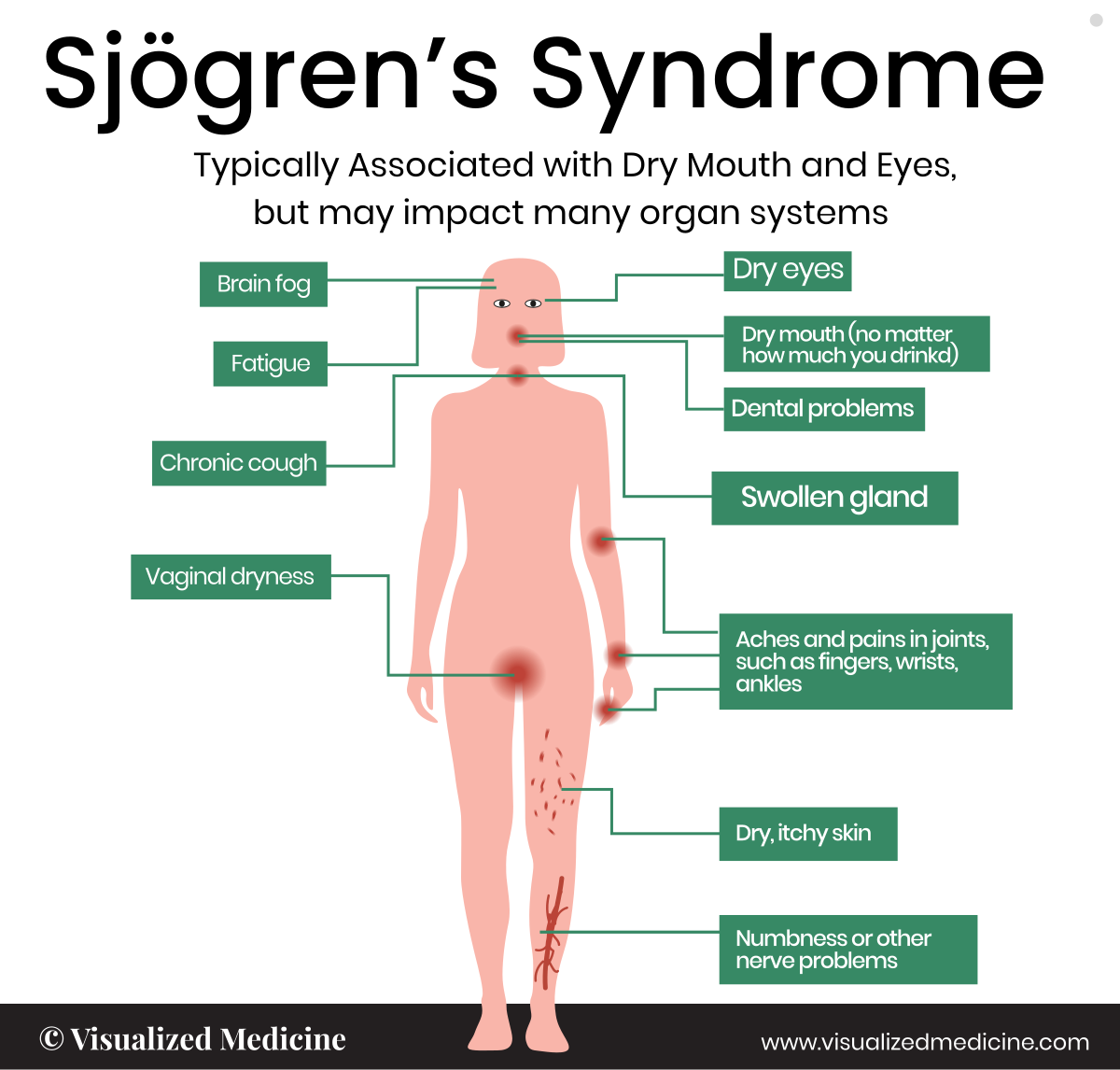
Sjögren’s syndrome is a chronic autoimmune disorder that happens when the immune system attacks the glands that make moisture in the eyes, mouth, and other parts of the body. The main symptoms are dry eyes and mouth, but other parts of the body may be affected as well, with many people reporting fatigue and joint and muscle pain. In addition, the disease can damage the lungs, kidneys, and nervous system. Sjögren’s syndrome predominantly affects women.†
5 Facts you should know
FACT
Autoimmune disease that affects the body's moisture-producing glands
FACT
The hallmark symptom of Sjögren syndrome is dry mouth and keratoconjunctivitis sicca
FACT
Other symptoms can include dry skin, vaginal dryness, a chronic cough, numbness in the arms and legs, feeling tired, muscle and joint pains, and thyroid problems
FACT
Sjögren's syndrome may be associated with other autoimmune diseases, including rheumatoid arthritis (RA), systemic lupus erythematosus (SLE) or systemic sclerosis
FACT
Those affected are also at an increased risk (15%) of lymphoma
Interest over time
Google searches
Common signs & symptoms
The most common symptoms are:
- Dry eyes.Your eyes may burn or itch or feel like they have sand in them. Sometimes, the dryness causes blurry vision or sensitivity to bright light. You may get irritated, itchy eyelids due to inflammation.
- Dry mouth.Your mouth may feel chalky, and you may have trouble swallowing, speaking, and tasting. You may develop more cavities and mouth infections.
In some cases, Sjögren’s syndrome affects other tissues and organs and has more widespread effects on the body. These other effects may cause:
Fatigue (feeling very tired)
Joint pain and muscle aches and weakness
Dry skin, nasal passages, and throat, and a dry cough
Skin rashes
Swelling of the glands around the face and neck
Trouble sleeping
Poor concentration and memory problems
Numbness, tingling, and weakness, especially in your arms and legs
Shortness of breath or trouble breathing
Source: National Institute of Arthritis and Musculoskeletal and Skin Diseases
Current treatments
There is no cure for Sjögren’s syndrome, so treatment focuses on relieving symptoms and preventing complications. Treatments are different for each person and will depend on which parts of the body are affected.
Eye treatments:
Eye drops (artificial tears)
Some people need prescription eye drops that contain medications to suppress the immune system and reduce inflammation in the eye.
Eye ointments
Punctal occlusion
Small plugs placed in the tear duct in the corners of the eyes block drainage and keep tears in the eyes longer.
Mouth treatments:
Artificial saliva
Saliva production stimulators
Cevimeline (Evoxac)
Pilocarpine (Salagen)
Anti-fungal medications
Top Clinical Trials
| Title | Description | Phase | Status | Interventions | Locations | More Info |
|---|---|---|---|---|---|---|
| A Randomized, Double-blind 2-arm NEPTUNUS Extension Study to Assess the Long-term Safety and Efficacy of Ianalumab in Patients With Sjogrens Syndrome. (NEPTUNUS-Ext) | The purpose of this study is to measure the long-term safety and tolerability of ianalumab in participants with Sjogrens syndrome who have previously completed treatment from one of two NEPTUNUS 1 year core studies | Phase 3 | Active, not recruiting | Drug: Ianalumab (VAY736) Other: Placebo | Multiple Learn more | More info |
Top Treatments in Research
| Agent | Class/MOA | Development Status | Company | Company Contact | Clinical Studies | More Information |
|---|---|---|---|---|---|---|
| Ianalumab (VAY736) | Targets B cells in two ways, namely combining B cell depletion via antibody-dependent cellular toxicity (ADCC) and interruption of BAFF-R mediated signals of B cell function and survival | Phase 3 | Novartis | Study Director/Novartis | More info | https://clinicaltrials.gov/study/NCT05985915More info |
† Genetic and Rare Diseases Information Center (GARD) - PO Box 8126, Gaithersburg, MD 20898-8126 https://rarediseases.info.nih.gov